Innovation & Sustainable Landscaping

Innovation & Sustainable Landscaping
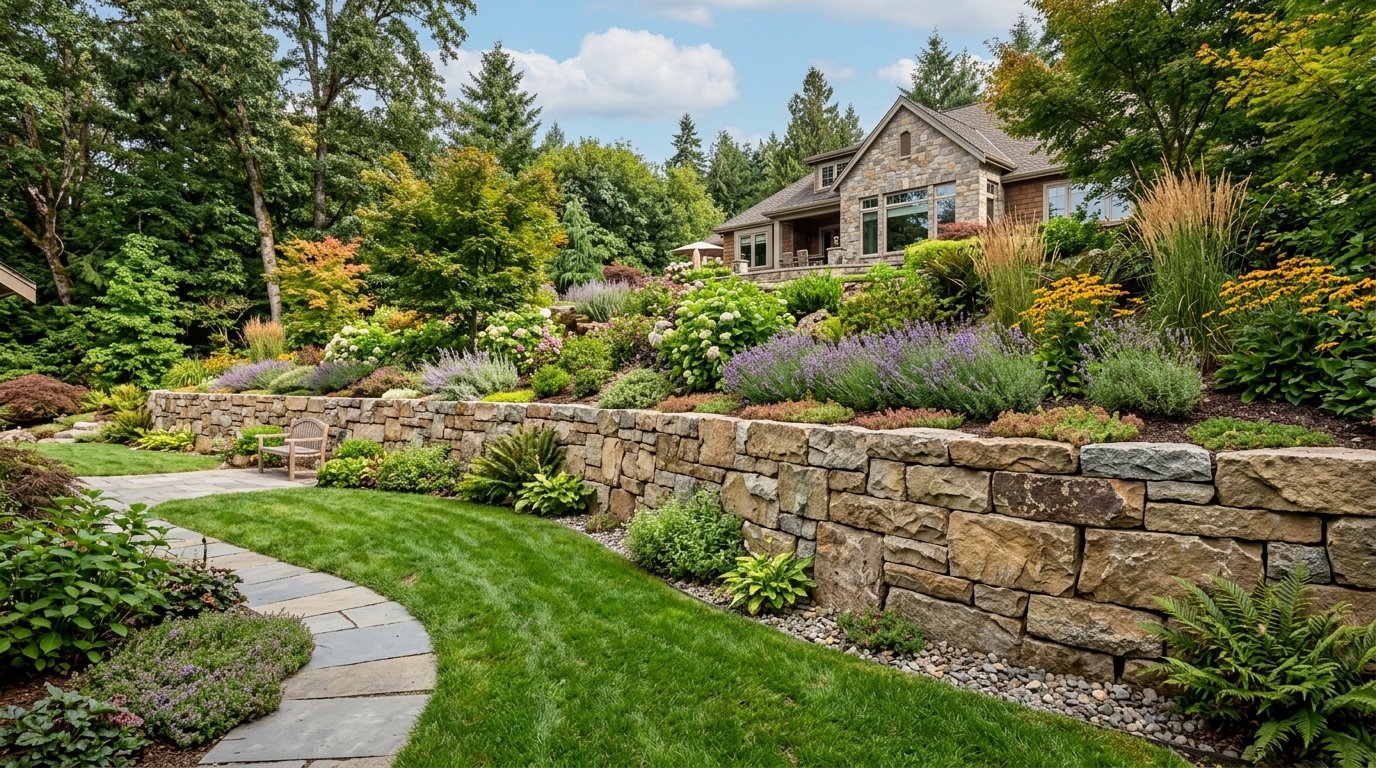
Sloped lots, eroding hillsides, split-level yards, and drainage challenges are common across New York City's five boroughs — and a properly engineered retaining wall is often the right solution. Singh Landscaping builds retaining walls that are structurally sound, properly drained, and finished to complement the aesthetics of any NYC property.
A retaining wall that fails is dangerous and expensive. We build to last — with proper footing depth, wall batter, drainage aggregate, and drainage tile behind every wall — so your investment holds for decades.
Retaining walls over a certain height in New York City may require a NYC Department of Buildings permit and engineering review. Singh Landscaping advises clients on permit requirements for their specific project and can coordinate with engineers as needed. We work throughout all five boroughs and understand the permit landscape for each borough's DOB office.
The four main types are: (1) gravity walls — rely on their own weight to hold soil back (dry-stacked stone, concrete block); (2) cantilever walls — use a structural footing and wall leverage, common in poured concrete; (3) anchored walls — use cables or rods anchored into the soil behind the wall for added stability; and (4) segmental retaining walls — interlocking concrete block systems like Allan Block or Versa-Lok, the most common choice for residential NYC properties.
Timber/landscape tie walls are typically the most affordable option for low walls under 3 feet. For walls 3 feet and taller, concrete block segmental systems offer the best value — durable, no-mortar installation, and widely available. Singh Landscaping recommends against timber for NYC properties near foundations due to long-term rot and movement risk.
Poured concrete and natural stone walls last the longest — 50–100+ years when properly built with drainage. Concrete block segmental systems like Allan Block and Versa-Lok are rated for 50+ years. All Singh Landscaping retaining walls are built with proper drainage aggregate and drainage tile behind the wall — the single most important factor in long-term performance.
A properly built retaining wall lasts 25–50 years on average, with stone and poured concrete lasting significantly longer. Walls that fail early almost always lack adequate drainage — water pressure behind an undrained wall is the leading cause of retaining wall failure.
A simple residential retaining wall (20–30 linear feet, under 3 feet high) typically takes 1–2 days for an experienced crew. Larger walls, walls requiring permits, or walls with complex drainage needs take longer. Singh Landscaping provides a clear project timeline with every estimate.